
posted by Lines Without Borders @ 9:24 AM
1 comments

Wednesday, December 20, 2006
Friday, December 15, 2006

A couple of excellent (and opposing) posts on identity politics and class (and concerning Walter Benn Michaels' book, The Trouble With Diversity):
posted by Lines Without Borders @ 1:05 PM
0 comments
Friday, December 01, 2006

Tuesday, November 28, 2006
Fifty-Four Forty or Fight?

Why doesn't the USA own Canada? They dominate us militarily, economically, and (presumeably) culturally. We have all the natural resources they need (oil, lumber, water, an educated labour force, bad comedians etc.), so why not just take us over? Would Canadians even defend against an attack? Or is our collective asses de-facto owned? This is a puzzle to me.

Another puzzle is what it means when people refer to "find out who they are, where they come from." What does this actually mean? It's as if one if casting a net back into history to fish out a story to call one's own. Who are we but ourselves? That is, assuming we have some control over recognizing ourself as a thing unencumbered and free of association with the world of ideas, a thing that floats like wisps of powdery snow off tree tops and melts into the vapor that is air.
posted by Lines Without Borders @ 1:19 PM
0 comments
Friday, November 24, 2006

Tuesday, November 21, 2006
Just a quick note to myself about rationality: Enlightenment 2.0?

There seems to be a lot more press and discussion about the irrationality of individuals in their decision-making. Behavioural studies show how when a person is given a set of choices, what they choose depends on how the choices have been presented and hence choices are inconsistent and therefore irrational.
Now as the academy and general discourse continues to discover, unravel, and document this seemingly fundamental mode of operation in human beings, will this lead to a more "rational" society? If we as a society come to document how irrational we are, will we become more driven towards rational outcomes? If computer technology helps us to acquire the information to perform calculations of our decision sets, will we use it? In other words, are we headed towards a kind of Enlightenment 2.0, without the trappings of attainable universal reason, but our decision-making becomes wholly consistent for each individual, even though what is rational is different for each person? Ah ha, the first step towards evolving into Vulcans!
posted by Lines Without Borders @ 2:52 PM
1 comments
Wednesday, November 15, 2006
an old joke

I do not think -- therefore I am not.
Here is the illustration of this principle:
One evening Rene Descartes went to relax at a local tavern. The tender approached and said, "Ah, good evening Monsieur Descartes! Shall I serve you the usual drink?".
Descartes replied, "I think not.", and promptly vanished.
posted by Lines Without Borders @ 1:31 PM
0 comments
Tuesday, November 07, 2006

Monday, November 06, 2006
Calorie for Calorie, Eye for Eye

Here are a couple interesting links found:
A paper on the CO2 emissions from an animal-based diet, and another on the depletion of fish stocks
This information really shocks me, though I wonder if this is a phase or is the end really nigh? I've always been one "tuned" into trends and I've noticed with a sudden deluge of information suggesting the death of the planet. The links above are good starters. Or maybe my perception of the physical world around me has changed after watching An Inconvenient Truth. Or perhaps it is Nicholas Stern's recent scathing (though inaccurate) report on climate change? Or Greg Mankiw's discussion of Pigovian Taxes or even press coverage of Canada's steadfast refusal to implement the Kyoto Protocol. Even one of my favorite commentators, Thomas Homer-Dixon is talking about "tectonic stresses" that will destroy us all. Oh and don't forget nuclear annihilation. Yay!
Some more to digest (as I rework my reason for existing after drinking a slurpee):
Human Annihilation
End of Civilization
End of the World - Philosophical Views
posted by Lines Without Borders @ 4:54 PM
0 comments
Thursday, November 02, 2006
Slowness
Today on my drive home, I heard David Suzuki interviewed on CBC Radio. He made an interesting point about technology and politics: in today's world it is very easy to get on the Internet and find a viewpoint to support whatever you believe in, whether it be intelligent design, anti-global warming, or that "aliens came down from space and raped women to start a species of super-humans". He lamented at how even a show like The Nature of Things has had to appeal with shock and awe in its programming, in order to get noticed in an ever-increasingly noisy "market" of information overload. We've lost our sense of slowness, to engage in long conversations and to contemplate. This is true. In an ever more complex world, how can we cope with the barrage of free market information overload? How can we collaborate in order to solve the impending disasters of our time. Thomas Homer-Dixon is right about the Ingenuity Gap. If we're spending all our energy on getting our voices heard, when do we have time to spend our energy on solving real problems?
posted by Lines Without Borders @ 7:34 PM
1 comments
Friday, October 13, 2006

See! It isn't my fault I eat so many chips!
(see article in comments)
posted by Lines Without Borders @ 3:19 PM
1 comments
Monday, October 02, 2006
To me this is an artifact from the last great age in creativity and synthesis of political and social consciousness. I miss those 80's.
posted by Lines Without Borders @ 1:01 PM
0 comments
Saturday, September 30, 2006
Path Dependent Man

I was looking for a term to describe the weight of history that I feel influences the shape of the world I experience and realized that a more suitable technical term already exists.
Path-dependence is a phrase used to mean one of two things. Some authors use path-dependence to mean simply "history matters" - a broad conception - whilst others use it to mean that institutions are self reinforcing - a narrow conception. It is this narrow conception which has the most explanatory force ...
The history of humanity is almost by definition path-dependent. Accidental events such as the death at an early age of major historical figures like Napoleon or Hitler would surely have altered the political geography of Europe and even the languages spoken in different countries today. Recent methodological work in comparative politics and sociology has adapted the concept of path dependence into analyses of political and social phenomenon. Path dependence has primarily been used in comparative-historical analyses to analyze the development and persistence of institutions, whether they be social, political, or cultural. (see http://en.wikipedia.org/wiki/Path_dependence)
If I am interpreting this concept correctly, then it seems our actions (assuming there is free will) has an effect that can contribute to the future structure of how things come to be in cultural, political, and social dimensions. We can't know with certainty how our actions will result in "tipping" any system of agents (such as a society) towards any specific outcome, but we can through looking at history uncover the past events or phenomenon that has initiated the "positive feedback" that results in the shape of our world today. This "positive feedback" is like the one seen in Global Warming, where the early changes in the melting polar ice caps encourage and enhance further melting, which ultimately results in sharp and rapid changes in the overall global climate.
It's very difficult to apply this to looking at issues such as racial representation and cultural values. It's easy to become offended by analytical stances, and is difficult to maintain objectivity when trying to understand the actions of individuals, and the individual as an agent in a group. We believe a thing called culture exists, yet any potential discussion is fraught with the struggle between accurate descriptions about the properties and behaviour of a culture, with the risks of unfairly or unknowingly attributing certain values (of the assessor) on the identities of the people in question. It is far easier to discuss the path dependent nature of Global Warming phenomena than it is to spell out the subtle challenges and changes people are facing in a world of tightening integration.
posted by Lines Without Borders @ 1:15 PM
0 comments
Tuesday, September 26, 2006
 My mom is a funny person. Everytime the discussion comes around to fashion or how one presents themself, she will point out (usually after seeing my dad pop out of the closet donning one of his many dapper outfits): "You know, fashion doesn't say anything about the person. Anyone with substance need not worry about how they dress. Their true talents will come out in their actions."
I can already hear the laugh track in this family sitcom. Dapper dad fighting with the righteous Maoist mom on what it takes to "make it". There is a kind of naivete in the suggestion that fashion doesn't matter because humans are afterall visual creatures, and the entire industries of image-making still continue to entertain and append our own imaginations of reality.
When I was young I used to think this was her way of trying to save money and avoid having to buy us kids new fashions for each school term. But now I don't think of it so much. It's just as well. I feel my cleanest when I'm unadorned with the possibilities of visually expressing with my body. I look at myself in the mirror, exploring the nooks and crannies, posing sometimes, making faces, check out my own buttocks: "I'm not so bad."
The ability to create and recognize symbolism and metaphor is one of the gifts of cognition and sentience. Perhaps it's an illusion that we live in a meritocratic society. Image is about difference; it exists to be ingested. But it's comforting to know the family is still one refuge where the dynamics of image-making has not
 affected the ability to fit in and feel loved. It almost seems to go without saying that a family's unconditional structure of love and acceptance rings true for most everyone. Then what is it that makes us not extend that idea to other people? I know my consciousness is always wavering between this contradiction, a gap between the compassion and contempt. Hmm.. I'm still trying to figure out what to write on this post.. but for the time being...
In the words of the absurdly ironic and hilarious Unfrozen Caveman Lawyer: "Ladies and gentlemen of the jury, I'm just a caveman. I fell on some ice and later got thawed out by some of your scientists. Your world frightens and confuses me!"
(images: James Iha of Smashing Pumpkins, Unfrozen Caveman Lawyer)
posted by Lines Without Borders @ 9:20 AM
0 comments
Monday, September 25, 2006
No Luck Club - head tax mix

"The Yellow Terror In All His Glory", 1899 editorial cartoon
http://www.dogmaradio.com/audio/download/67
posted by Lines Without Borders @ 9:35 PM
0 comments
Monday, September 18, 2006
Notice
My perception filters and processes as is necessary to function, to invent thoughts and to inspire a sense of direction. But what if the default filters are all wrong? What if the machinery is faulty, the software of my perception full of bugs that create a whole bunch of unexpected perceptual errors? Then what? How can the code be rewritten? Who can rewrite my code? Can it be rewritten? How can it be read?
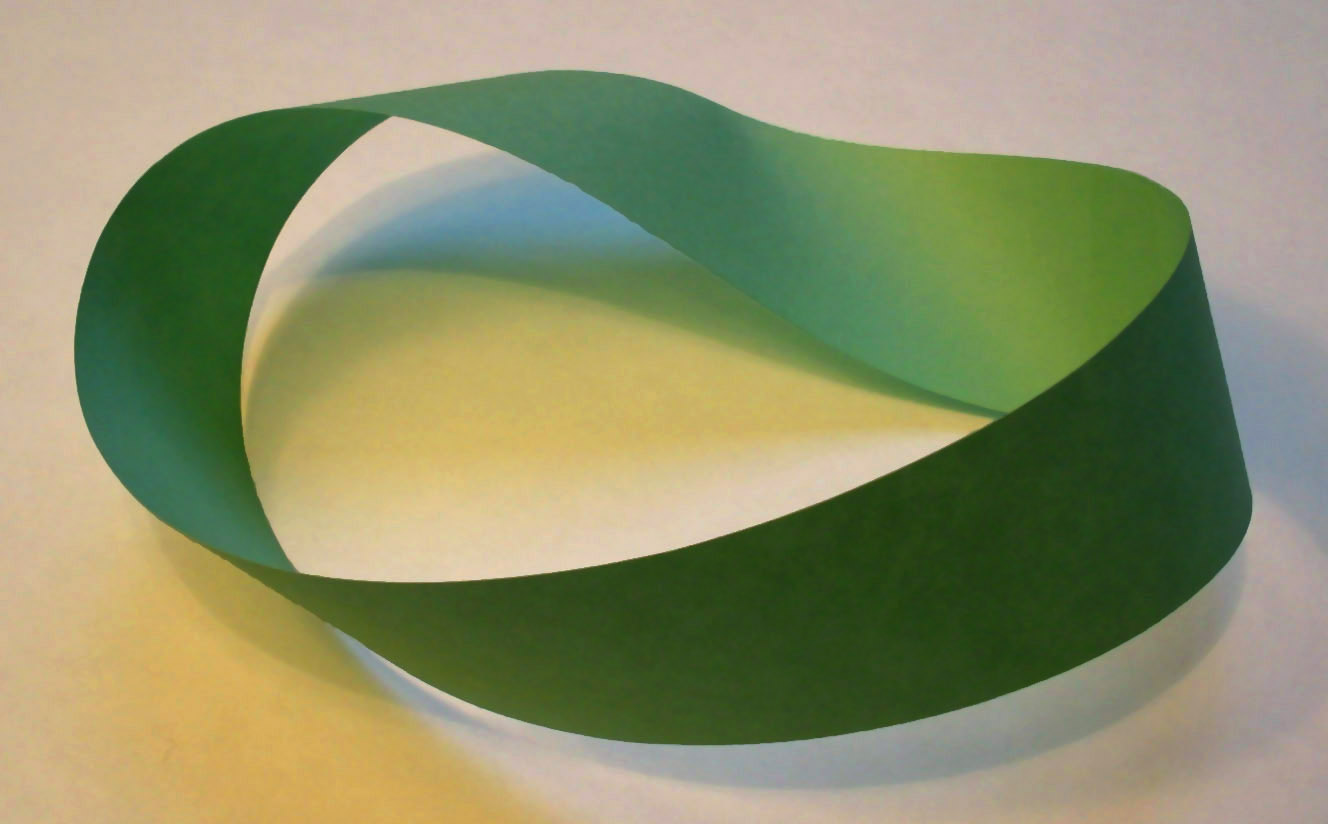
(image: Mobius strip)
(image: Mobius strip)
posted by Lines Without Borders @ 4:27 PM
0 comments
Friday, September 15, 2006
Reminding myself to post; economy of body

My girlfriend deftly reminded me that I haven't been posting. So here I am again. It's very important the part of brain that translates ideas and crafts them into sentences, limbers up now and again.
As I approach the end of the day, I start to think about food. Not just any food mind you, but the wet soppy stuff, the kind of food you know someone's mom sweated over in the kitchen all day. Stew, soup, gravy, something really meaty and substantial. This is what I want now. This is living in the present is it not? Hahaha well eating food makes me think about the economy of body.
One of the most amazing things about my own machine - this mass that clings to my bones of a body - is that it seems to function quite flexibly. I can starve it, fatten it up, inject smoke, and/or do any such thing that will invoke an extreme reaction and quite obediently, it brings me back to a kind of general equilibrium. The analogy is like a trading system of agents, like the global economy we live in from day to day. Each major organ operates like a country, it takes its critical inputs, produces outputs, and trades with other organs in order to continue its life. Sometimes organs die. Sometimes economies collapse. But the self-regulatory manner in which a human body can restore itself back to health, or adapt to some kind of biological happenstance is rather amazing. It's hard to say how far one can take the analogy, but as an economy of body, for the most part it does a fairly consistent job. The sad thing though is that bodies do age and die, and surely, this is where the analogy with our global economy should stop. If I can.
posted by Lines Without Borders @ 4:21 PM
0 comments
Sunday, August 13, 2006
Fancying becoming scholarly
Wow it's been almost a month since my last posting here. It definately is hard to push oneself to oil ones bearings. So what to write about? Hmm...
Sometimes when I think where my life is going, I wonder how nice it would to be a scholar. By scholar, I mean an almost ancient sort of person who spends her or his time comtemplating ideas, examining them through essays and stories, through poetry or song or debate, to learn from and to instill in others a passion for all that is known, to uncover that which sits on the cusp of the knowable, and to shed light in the direction of the yet-to-be-known. Sadly, the barriers to such a life is high because mainly, no such life exists. It is myth.
 For the most part, scholars today specialize in a very specific field. This is the unavoidable side effect of human history that has created voluminous amounts of knowledge that must be further analyzed, distilled, tested and revised. Even if every human being has innate "polymath" capabilities, the biggest enemy would still be the time required to digest all of known human knowledge. Therefore specialization is the most efficient way to conduct the work of professional academia, breaking down each demarcated field and studying its most manageable units of information. It's an exercise in the division of labour. Unfortunately this has the potential to make the life of an academic tedious unless one is lucky enough to find a niche that is unoccupied but also supremely interesting. And by interesting, I mean that kind of gut-wrenching thirst-quenching experience that satiates the unending depth of curiosity.
I'm trying to paint a negative picture here. OK so maybe it's just sour grapes, the curmudgeon in me that fabricates these conclusions about what it's like to be an academic. The glamour that society showers upon them makes me cringe with a bit of envy, that somehow they can experience a kind of freedom I cannot obtain. "The grass is always greener on the other side" people often say.
It reminds me of the time when becoming an IT consultant was the penultimate achievement. When I first became one, I remember the elation, the anticipation of jetsetting across the continent, tending to important clients, crafting strategic and sophisticated solutions to enhance the lives of these fellow corporate citizens. I was an Archibishop of Information Technology ready to bless and sanctify the re-engineering of badly implemented systems. Oh how sad that such a life never lived up to its own immaculate conception.
Of course I still think it's very appealing to work and live in the world of ideas. But I don't want to be defined by narrow interests. I desire encyclopedic breadth, the sharpness of scientific method, and the expressiveness of art. I want to know that if math or logic fails me, I can resort to poetry or prose to elucidate matters.
So now I'm trying to live a tender, balanced, and inquisitive life. I hope to energize myself with vitality and vigour, to make my "work", whatever it is, useful or helpful and to know my existence is not merely a discarded soda can or some expired stock option; more simply I just wish that my mind is not cluttered with the noise of leading a life less fulfilled. I want to know that in the face of my own history, turmoil, adversity and self-doubt, that I did my best to develop as a person worthy of the miracle of life.
Sometimes when I think where my life is going, I wonder how nice it would to be a scholar. By scholar, I mean an almost ancient sort of person who spends her or his time comtemplating ideas, examining them through essays and stories, through poetry or song or debate, to learn from and to instill in others a passion for all that is known, to uncover that which sits on the cusp of the knowable, and to shed light in the direction of the yet-to-be-known. Sadly, the barriers to such a life is high because mainly, no such life exists. It is myth.
 For the most part, scholars today specialize in a very specific field. This is the unavoidable side effect of human history that has created voluminous amounts of knowledge that must be further analyzed, distilled, tested and revised. Even if every human being has innate "polymath" capabilities, the biggest enemy would still be the time required to digest all of known human knowledge. Therefore specialization is the most efficient way to conduct the work of professional academia, breaking down each demarcated field and studying its most manageable units of information. It's an exercise in the division of labour. Unfortunately this has the potential to make the life of an academic tedious unless one is lucky enough to find a niche that is unoccupied but also supremely interesting. And by interesting, I mean that kind of gut-wrenching thirst-quenching experience that satiates the unending depth of curiosity.
I'm trying to paint a negative picture here. OK so maybe it's just sour grapes, the curmudgeon in me that fabricates these conclusions about what it's like to be an academic. The glamour that society showers upon them makes me cringe with a bit of envy, that somehow they can experience a kind of freedom I cannot obtain. "The grass is always greener on the other side" people often say.
It reminds me of the time when becoming an IT consultant was the penultimate achievement. When I first became one, I remember the elation, the anticipation of jetsetting across the continent, tending to important clients, crafting strategic and sophisticated solutions to enhance the lives of these fellow corporate citizens. I was an Archibishop of Information Technology ready to bless and sanctify the re-engineering of badly implemented systems. Oh how sad that such a life never lived up to its own immaculate conception.
Of course I still think it's very appealing to work and live in the world of ideas. But I don't want to be defined by narrow interests. I desire encyclopedic breadth, the sharpness of scientific method, and the expressiveness of art. I want to know that if math or logic fails me, I can resort to poetry or prose to elucidate matters.
So now I'm trying to live a tender, balanced, and inquisitive life. I hope to energize myself with vitality and vigour, to make my "work", whatever it is, useful or helpful and to know my existence is not merely a discarded soda can or some expired stock option; more simply I just wish that my mind is not cluttered with the noise of leading a life less fulfilled. I want to know that in the face of my own history, turmoil, adversity and self-doubt, that I did my best to develop as a person worthy of the miracle of life.
posted by Lines Without Borders @ 3:13 PM
0 comments
Sunday, July 16, 2006
Language is cool.
In my course on discrete mathematics, I am given arguments with the goal of proving the validity of them and the truthfulness of their claims. Ultimately these statements of something (anything) could be reduced to a set of symbols that can then be plumbed for an answer to determine its truthfulness. Within this world view, everything is either true or false, unless we produce undecidable statements such as the Liar's Paradox:
I am lying now.
This statement is false.
The paradox here is if you presume the preceding statements are to be either, true or false, what are these statements actually saying?
Language is special that way. Without it, we may not be able to arrive at paradoxes like the above. Yet it is this language which prevents us from going further. It's almost screaming out to us to question some of our foundational understanding of knowledge.
I feel there is so much more to discover which we cannot know (yet). Humans are blessed with creativity, a kind of purposeful birthing of pseudo-contemplation, of strange dreams that blend into reality to inspire us. And these inspirations and discoveries will come to be recorded in languages, either in novels or journals, in mathematical formulas, in musical compositions, or in unexplored spaces that occupy the "lost in translation". Language equally improves our understanding as it does to limit it, a constant reminder to continually go beyond possibility, to improve the boundaries of the knowable. That's just damn cool.
I am lying now.
This statement is false.
The paradox here is if you presume the preceding statements are to be either, true or false, what are these statements actually saying?
Language is special that way. Without it, we may not be able to arrive at paradoxes like the above. Yet it is this language which prevents us from going further. It's almost screaming out to us to question some of our foundational understanding of knowledge.
I feel there is so much more to discover which we cannot know (yet). Humans are blessed with creativity, a kind of purposeful birthing of pseudo-contemplation, of strange dreams that blend into reality to inspire us. And these inspirations and discoveries will come to be recorded in languages, either in novels or journals, in mathematical formulas, in musical compositions, or in unexplored spaces that occupy the "lost in translation". Language equally improves our understanding as it does to limit it, a constant reminder to continually go beyond possibility, to improve the boundaries of the knowable. That's just damn cool.
posted by Lines Without Borders @ 5:42 PM
0 comments
Friday, July 07, 2006
To and fro, to and fro, cultivating a small field.
My, my, it certainly is hard to maintain a decent committment to writing regularly. No wonder my skills are declining along with my vision. Anyways it's friday at the office and I've got a few moments to dip the quill.
Last weekend I came across an article on the phenom that is Yon-Sama, a.k.a. Bae Yong-Jun. His immense popularity is testament to the reach of Korean soft power and the country's successful cultural export-focused strategy. Apparently his star power is shining not only in Japan, but also in Hong Kong, Taiwan, and countries in South-East Asia. Having no familiarity with Korean soap opera productions, I can't say whether this is a good or bad thing. However, there was a blurb by an Anthropologist that immediately cut me:
I can totally empathize, even rationalize this sentiment. It's something that's part of the habitus of being a Canadian of Chinese descent. ("Descent" is a funny word because it sounds like a fall from grace.) Until contemporary "Asian-ness" entered my consciousness, my transcultural outlook took on a temporal dimension, a schism of -isms: Canadian-ness based on modernism, multi-culturalism, democratic universalism, individualism, futurism; Chinese-ness based on nostalgic traditionalism, ancestor worship and familialism, historicism.
It's no surprise to me that in the economies where the Yon-sama phenomenon takes root, they are also the very countries that define the so-called "Asian century": forward-looking nations that have industrialized or are industrializing towards the making of a tommorrow with extremely high growth rates. They're now able to take a rest, unwind, lie down and imagine themselves as they used to be.
It's also no surprise that Yon-sama's success came in the form of a soap opera about pre-modern Korea. Maybe our best conceptions to soothe the alienating potential of globalization is to take refuge that we were once dignified, cultured, esteemed, and rarified before the spectre of "progress" landed at our feet. And sometimes that is how conversations at my family dinner table shake down too. How about yours?

(see comments for the Globe and Mail article)
Last weekend I came across an article on the phenom that is Yon-Sama, a.k.a. Bae Yong-Jun. His immense popularity is testament to the reach of Korean soft power and the country's successful cultural export-focused strategy. Apparently his star power is shining not only in Japan, but also in Hong Kong, Taiwan, and countries in South-East Asia. Having no familiarity with Korean soap opera productions, I can't say whether this is a good or bad thing. However, there was a blurb by an Anthropologist that immediately cut me:
[UBC] anthropology professor Millie Creighton says the soap operas rekindle in viewers a passion for the past.
"In most of these countries, many scholars have written about a resurging nostalgia that seems to have taken hold just around the time they became fully industrialized, modernized and highly westernized," says Prof. Creighton, who currently teaches in Japan.
"Suddenly, in each case, there seems to be a reverse longing for what might have been lost and a sense of potentially having lost their 'Asian-ness.' "
I can totally empathize, even rationalize this sentiment. It's something that's part of the habitus of being a Canadian of Chinese descent. ("Descent" is a funny word because it sounds like a fall from grace.) Until contemporary "Asian-ness" entered my consciousness, my transcultural outlook took on a temporal dimension, a schism of -isms: Canadian-ness based on modernism, multi-culturalism, democratic universalism, individualism, futurism; Chinese-ness based on nostalgic traditionalism, ancestor worship and familialism, historicism.
It's no surprise to me that in the economies where the Yon-sama phenomenon takes root, they are also the very countries that define the so-called "Asian century": forward-looking nations that have industrialized or are industrializing towards the making of a tommorrow with extremely high growth rates. They're now able to take a rest, unwind, lie down and imagine themselves as they used to be.
It's also no surprise that Yon-sama's success came in the form of a soap opera about pre-modern Korea. Maybe our best conceptions to soothe the alienating potential of globalization is to take refuge that we were once dignified, cultured, esteemed, and rarified before the spectre of "progress" landed at our feet. And sometimes that is how conversations at my family dinner table shake down too. How about yours?
(see comments for the Globe and Mail article)
posted by Lines Without Borders @ 3:50 PM
1 comments
Thursday, June 29, 2006
Anarcho-syndicalism and technology?
I found a clip of Noam Chomsky in Necessary Illusions about the role of mass communication in the world today:
Sure he comes across didactic, the lefty anarcho-syndicalist, but he makes valid points. My intuition tells me that all of these networked communication technologies will someday make many of us to a certain degree, anarchists whether we like it or not, and that media censorship and control over the doctrinal system will one day be mandated here so that order is maintained. The test of the limits of individual agency and help us unravel the recursive nature of true autonomous free will.
What I'm suggesting is that if networked technology takes us in a direction where people around the world can organize and mobilize themselves freely, creating and managing economic surpluses themselves through digital mediums of exchange, away from the eyes of government institutions such as tax collections, the world could balkanize along ideological lines, across national borders to form pseudo-sovereigns. (Encryption and peer-to-peer technologies may enable this.) When will this happen? When technological innovation mediates and alleviates the problem of inter-language communication. This potential for cross-border balkanization would be the raison d'etre for "elites" (eg. governments) to control the doctrinal system and sustain existing structures of national border. Unfortunately these forces could end up reinforcing resistance and further engendering balkanization. We can look to mass communication in China today - government censorship versus the interests of the disenfranchised - to see how this will play out on a global scale.
Ok I'm ready to admit this bleak image is nothing but a passing fancy. I'm not sure if I can wholeheartedly believe it. What it does signify to me that this is probably something worthwhile to investigate: how technological innovation and diffusion may change the organization of global political power.
Sure he comes across didactic, the lefty anarcho-syndicalist, but he makes valid points. My intuition tells me that all of these networked communication technologies will someday make many of us to a certain degree, anarchists whether we like it or not, and that media censorship and control over the doctrinal system will one day be mandated here so that order is maintained. The test of the limits of individual agency and help us unravel the recursive nature of true autonomous free will.
What I'm suggesting is that if networked technology takes us in a direction where people around the world can organize and mobilize themselves freely, creating and managing economic surpluses themselves through digital mediums of exchange, away from the eyes of government institutions such as tax collections, the world could balkanize along ideological lines, across national borders to form pseudo-sovereigns. (Encryption and peer-to-peer technologies may enable this.) When will this happen? When technological innovation mediates and alleviates the problem of inter-language communication. This potential for cross-border balkanization would be the raison d'etre for "elites" (eg. governments) to control the doctrinal system and sustain existing structures of national border. Unfortunately these forces could end up reinforcing resistance and further engendering balkanization. We can look to mass communication in China today - government censorship versus the interests of the disenfranchised - to see how this will play out on a global scale.
Ok I'm ready to admit this bleak image is nothing but a passing fancy. I'm not sure if I can wholeheartedly believe it. What it does signify to me that this is probably something worthwhile to investigate: how technological innovation and diffusion may change the organization of global political power.
posted by Lines Without Borders @ 11:45 PM
0 comments
Saturday, June 24, 2006
It's hard to write
I've been struggling for the past few days with a blog entry, where I'm trying to synthesize the types of books, articles, and interests I have with my own idea of how to lead a worthy life, whilst generalizing a model to frame entrepreneurship, ethics, and personal fulfillment together. Writing is so frustrating for me right now! But I will endure because I know that these momentary struggles give me strength of spirit, and more importantly, the clarity of intent.
posted by Lines Without Borders @ 5:11 PM
0 comments
Tuesday, June 20, 2006
No free will
Ok so I have no free will right now. This post, these words, the idea of it is situated in the fact that there is no free will. Every minute action from the moment of my conception has created an effect such that if you were omnipotent (i.e. Bill Gates), you'd be able to accurately predict the chain of events in my life and know that I have just arrived at the very end of my blog entry.
posted by Lines Without Borders @ 10:45 PM
0 comments
Tying up oneself subliminally.
One of the reasons why this blog was started was to instill a sense that my own voice mattered. Everyday it seemed ideas and debates were raging, coming and going, like a headache or a sprain seeking medical attention. It's little comfort to know that these words are tip-toeing from my fingers and filling up pixels to be born again somewhere else (most likely on my own screens no doubt!)
Of course there is a desire for me to be seen, to be read, to exhibit more of my trueness than my physical and social self can communicate. Can words in a blog be the antidote to inadequacy and emptiness? Can it augment my existence in reality, my "more than meets the eye" accessory?
I'm going to begin by stating "my" obvious when it comes to writing words. It can be lonely and unrewarding, yet unrelenting in how it cages me to perfect their flow, iteration after iteration. Words are kind of a mirror that reflects beyond ourselves and back (like transparent flesh sandwiched between two reflections), reaching into a multiverse of possible interpretations that recursively cancels itself. Day after day, the thoughts in my mind come at me in wet lashes, a permanent 24/7 channel surf that tows me away from the shoreline into a vast turbulent sea of memes. I wonder if my creation of self would exist in the same manner 2000 years ago? But there's no time for yesterday.
This blog might be a life line that I can reach for to get back to safer shores, where I can feel the sand between my toes and let sunbeams bounce off my forehead. So this is how the entry ends, free, unadulterated and flowing from my fingers, pixels to be born again in an optimistic future?

(image: The Masterpiece, Mysteries of the Horizon by René Magritte)
Of course there is a desire for me to be seen, to be read, to exhibit more of my trueness than my physical and social self can communicate. Can words in a blog be the antidote to inadequacy and emptiness? Can it augment my existence in reality, my "more than meets the eye" accessory?
I'm going to begin by stating "my" obvious when it comes to writing words. It can be lonely and unrewarding, yet unrelenting in how it cages me to perfect their flow, iteration after iteration. Words are kind of a mirror that reflects beyond ourselves and back (like transparent flesh sandwiched between two reflections), reaching into a multiverse of possible interpretations that recursively cancels itself. Day after day, the thoughts in my mind come at me in wet lashes, a permanent 24/7 channel surf that tows me away from the shoreline into a vast turbulent sea of memes. I wonder if my creation of self would exist in the same manner 2000 years ago? But there's no time for yesterday.
This blog might be a life line that I can reach for to get back to safer shores, where I can feel the sand between my toes and let sunbeams bounce off my forehead. So this is how the entry ends, free, unadulterated and flowing from my fingers, pixels to be born again in an optimistic future?
(image: The Masterpiece, Mysteries of the Horizon by René Magritte)
posted by Lines Without Borders @ 4:22 PM
0 comments
Saturday, June 17, 2006
To begin.
Hello me. This is a space to share and track ideas with my selve(s) and others who choose to subject themselves to them. I seek to open the floodgates a bit, jump into a sea of memes and let flow wherever the currents of the day carry me. Here's to hoping it's tepid.
posted by Lines Without Borders @ 10:05 AM
0 comments

